


E-mobility temperature sensors
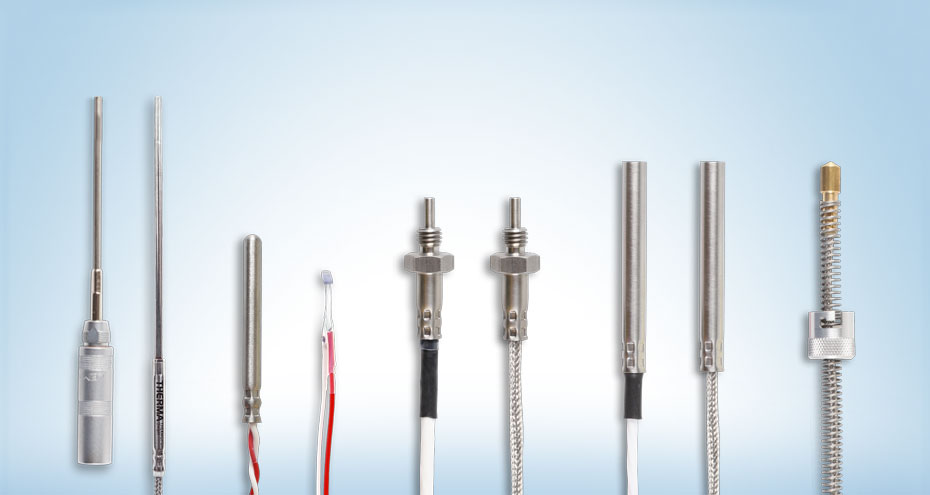
E-mobility temperature sensors direct from the German manufacturer
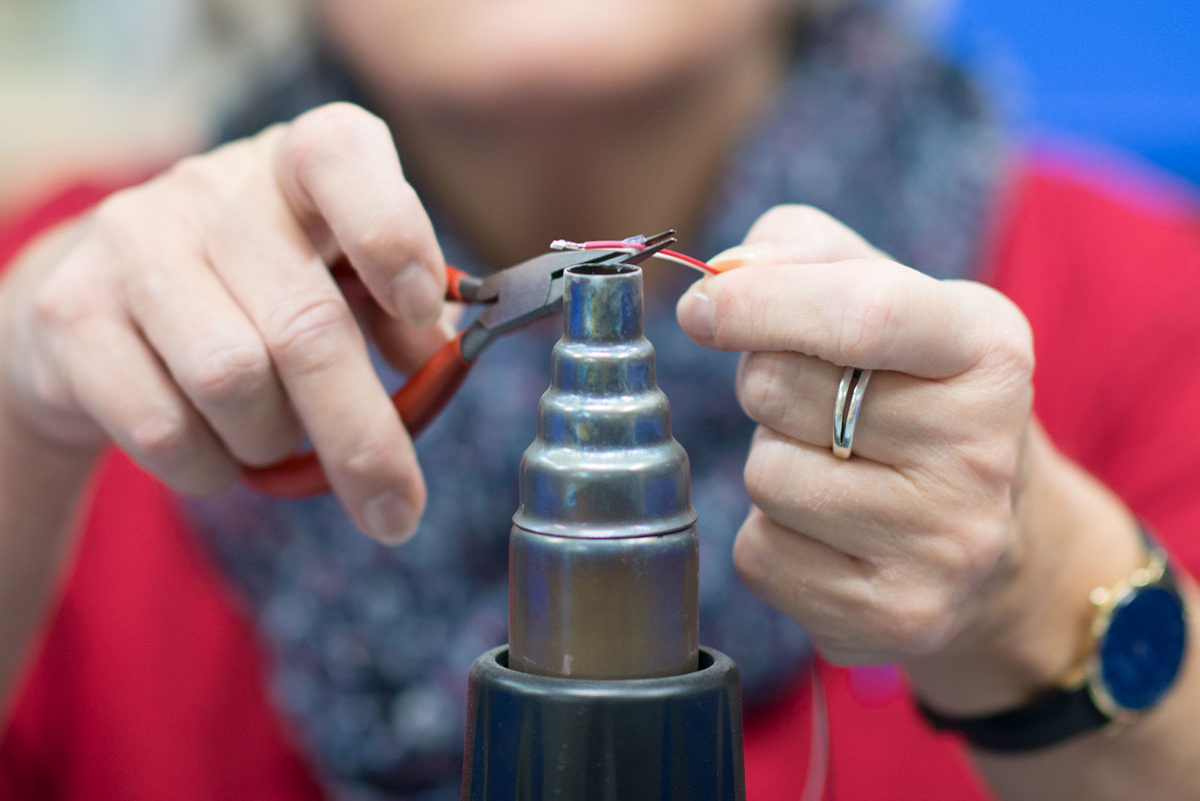
At Therma we manufacture your e-mobility temperature sensor at our Lindlar site, entirely by hand and without any middleman. Founded in 1991, our family business knows temperature measurement from more than three decades of practice. Standard products and custom builds come from a single source.
Because every probe is made to ISO 9001, tolerance class 1 to DIN EN 60584-1 is the binding benchmark. For electromobility we supply Pt100 and Pt1000 as well as thermocouples of types K, N, T and J, each matched to the measuring range, size and installation situation of your application. A standard delivery time of 1 week applies to many designs from stock.
Where your application differs from the catalogue, a temperature sensor for electromobility is built to your drawing or STEP file, usually within 1 to 2 weeks. An order value of 250 EUR is enough for free delivery within Germany. If needed, you can round out our range of resistance thermometers with cables, connectors and compression fittings.
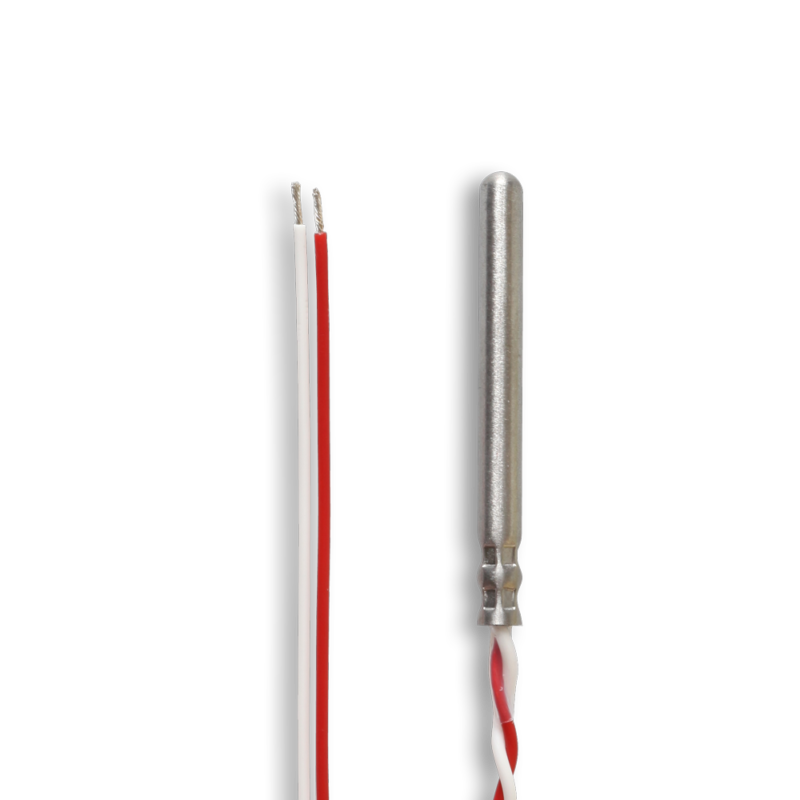
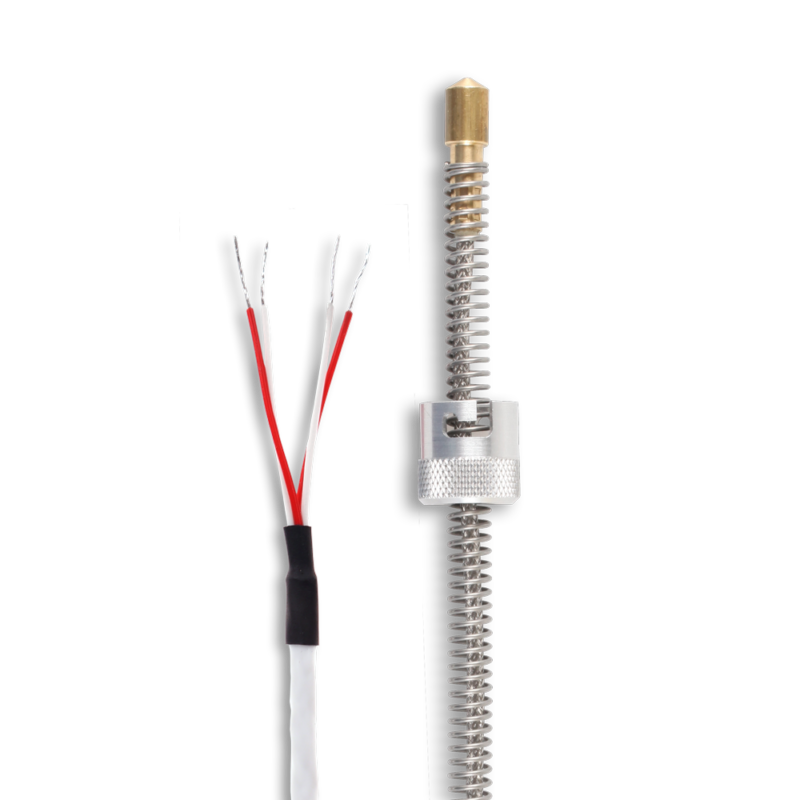
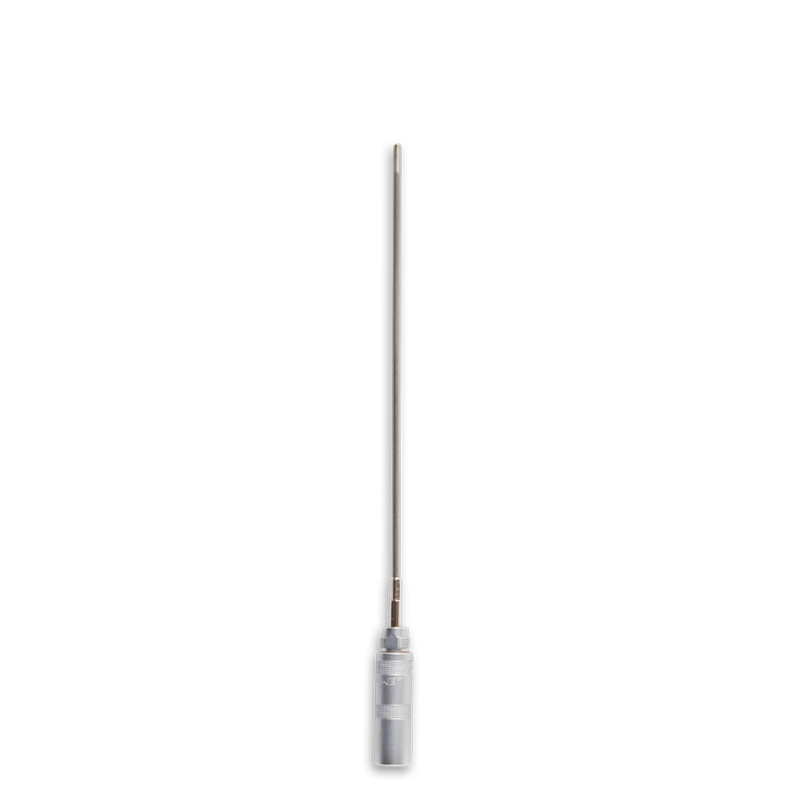
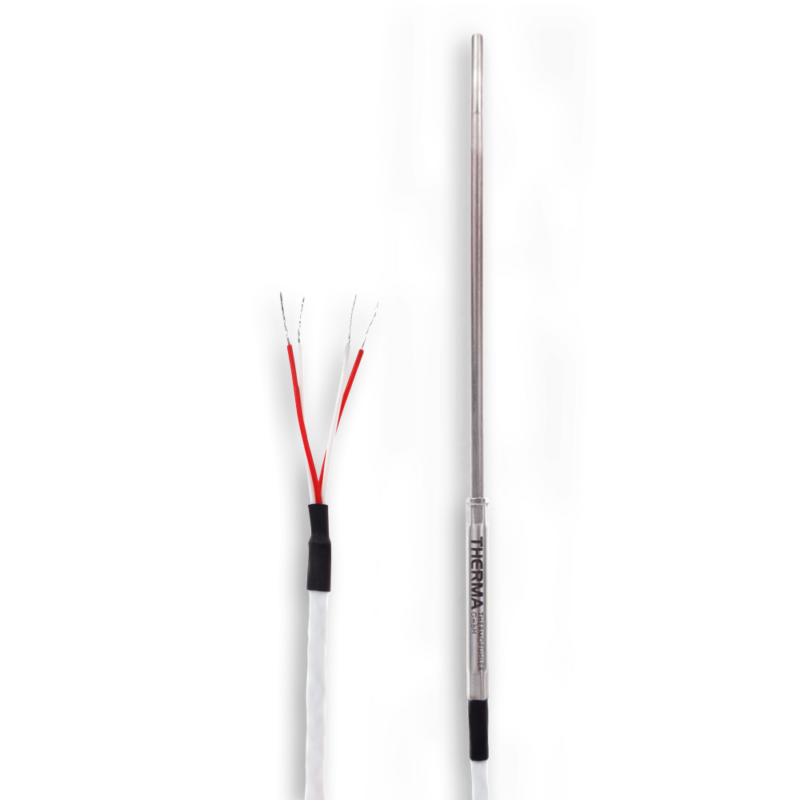

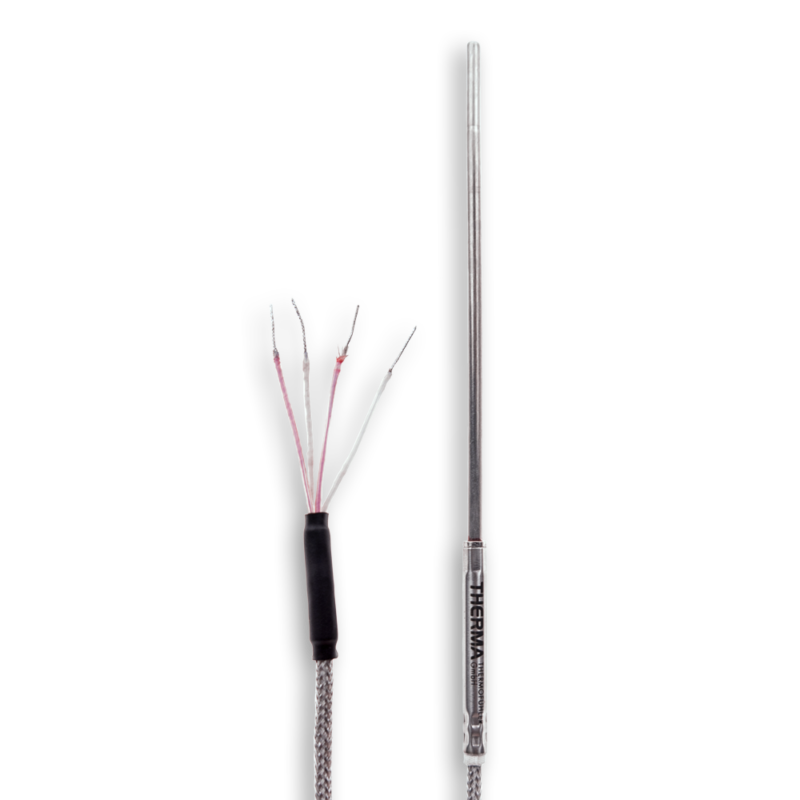
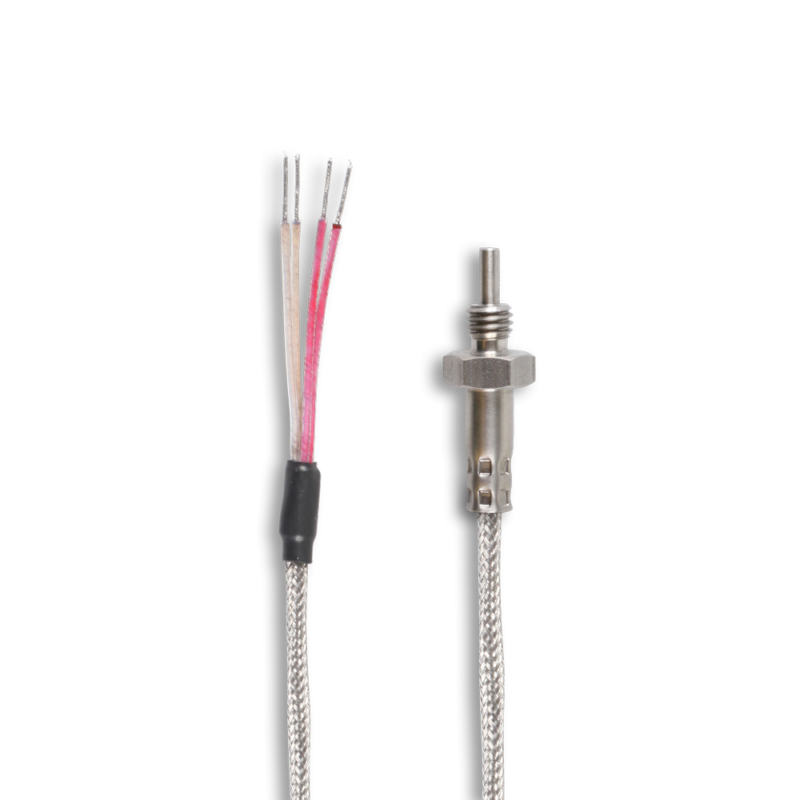

Cable lug RTD | Teflon | Pt1000
22,78 € Cable lug RTD | Teflon | Pt100
21,86 €

Ceramic compression-type fitting
18,80 € Brass compression-type fitting
13,10 € Teflon compression-type fitting
13,10 € 


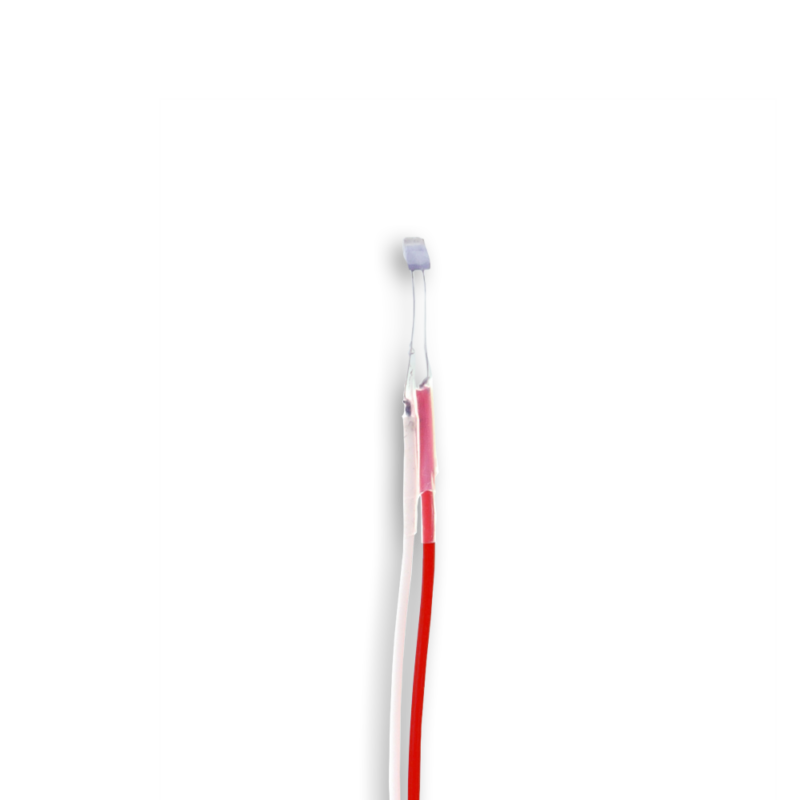
Sheathing | Teflon | NTC 10 kOhm
70,30 € 
Sheathing tube | Teflon | Type L
17,35 € Sheathing tube | Teflon | Type J
17,35 € Cable lug | Fibreglass | Type J
20,55 € Sheathing | Fibreglass | Ni120
72,75 € Sheathing | Fibreglass | Pt1000
68,25 € Sheathing tube | Teflon | Ni120
26,60 € Sheathing tube | Teflon | Pt1000
22,10 € 
Sheathing | without wire | Ni120
64,90 € Screw-in RTD | Teflon | Pt1000
34,15 € 

Sheathing | without wire | Pt100
59,40 € Sheathing | Fibreglass | Pt100
67,25 € Sheathing tube | Teflon | Pt100
21,10 € Cable lug | Fibreglass | Type K
20,55 €

Sheathing tube | Teflon | Type K
17,35 € Spring loaded | Copper | Type K
37,68 € 


TEX/CUTEXTW-24 x 24F-KK-IEC | 50 m
2.261,50 € TEX/CUTEXTW-24 x 24F-KK-IEC | 25 m
1.130,75 € TEX/CUTEXTW-4 x 24F-KK-IEC | 10 m
128,90 € TEX/CUTEXTW-6 x 24F-KK-IEC | 10 m
141,30 € TEX/CUTEXTW-10 x 24F-KK-IEC | 10 m
210,10 € TEX/CUTEXTW-24 x 24F-KK-IEC | 10 m
452,30 € TEX/CUTEXTW-4 x 24F-KK-IEC | 25 m
322,25 € TEX/CUTEXTW-4 x 24F-KK-IEC | 50 m
644,50 € TEX/CUTEXTW-6 x 24F-KK-IEC | 25 m
353,25 € TEX/CUTEXTW-6 x 24F-KK-IEC | 50 m
706,50 € TEX/CUTEXTW-10 x 24F-KK-IEC | 25 m
525,25 € TEX/CUTEXTW-10 x 24F-KK-IEC | 50 m
1.050,50 € PVC – P/CUPTW-24F-K-IEC | 10 m
19,60 € Other resistance thermometers
Temperature monitoring in the electric vehicle from cell to drivetrain
Range, charging power and battery life depend heavily on temperature monitoring in the electric vehicle. Wherever current flows, heat builds up, and every assembly from the cell stack through the power electronics to the electric motor has to keep it reliably in view. Overheated cells age faster and permanently lose capacity.
In the power electronics, high currents meet steep temperature gradients. Milliseconds count here. Where heat losses arise at inverters, IGBT modules and DC/DC converters, a power-electronics temperature sensor captures them precisely and without delay. Our flexible sheathed thermocouples with diameters from 0.5 mm and a short response time are ideal for this.
On drivetrain test benches, an electric-vehicle temperature sensor provides the data basis for your development. Pt100 and Pt1000 measure with long-term stability around the motor, while thermocouples reliably cover the higher temperature ranges. This way your vehicle temperature monitoring relies on reproducible values instead of rough estimates.
Reliably monitoring thermal management in battery packs
While lithium cells charge, sensors keep the ideal window between 15 and 35 °C inside the battery pack. As soon as the temperature deviates, the battery management system throttles the power or stops the charging process. Close-meshed measurement prevents thermal runaway.
When cell surfaces and module walls give off heat, flat designs with good thermal contact prove their worth. Our surface thermocouples attach with an adhesive or magnetic holder. This lets you add an electric-car temperature sensor to test setups even after the fact, without altering the cell chemistry.
And the fuel cell? At the stack and cooling circuit, a fuel-cell temperature sensor monitors operating temperatures around 80 °C. For every measuring task we agree on material, length and connection type together with you, so the sensor fits your setup exactly.
Which charging-infrastructure temperature sensor suits your project
Which measuring points does a charging-infrastructure temperature sensor cover? The spectrum ranges from the charging cable to the grid connection. For the right choice, temperature range, installation situation and required accuracy all matter equally. The overview below assigns common e-mobility measuring points to a suitable sensor solution.
| Measuring point | Recommended sensor | Typical range |
|---|---|---|
| Charging plug and contacts | Pt1000 | 0 to 120 °C |
| Charging station power unit | Pt100 or type K | 0 to 200 °C |
| Battery cell | Surface Pt100 | 15 to 60 °C |
| Electric motor and winding | Type K or N | up to 400 °C |
When contact resistances in the charging plug generate critical heat during fast charging, a charging-plug temperature sensor warns you early. Where the charging station bundles transformers and power modules, a charging-station temperature sensor monitors their heating. As soon as an NTC e-mobility temperature sensor reaches its accuracy or temperature limit, Pt100 provides the long-term-stable alternative. Ready to connect, we complete every solution with thermo connectors to DIN EN 50212.
Personal expert advice from our team in Lindlar
As a family business, we support you personally from the first sketch to series delivery. Because many employees have been on board since the company was founded in 1991, decades of practice go into every recommendation. Contacts such as Björn Hausberg and Benjamin Diepgrond clarify materials, tolerance classes, installation dimensions and the right connection type for your setup with you.
Whenever a custom solution is needed, our engineering department processes drawings and STEP files, usually in 1 to 2 weeks. All processes are certified to ISO 9001 and UKAS. This gives you an e-mobility temperature sensor that fits your measuring task exactly instead of an off-the-shelf compromise.
Are you planning a specific e-mobility project? Request your quote via the configurator or by phone, and we will advise you expertly and with a focus on solutions.
