




Cryo down to -200°C
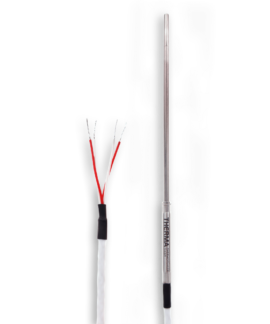

- Entire production made in Germany (100% handmade)
- German specialists (Employees have mostly been with the family business since it was founded)
- High quality and maximum of durability (high quality materials, better and experienced manufacturing)
- Custom-made production according to specific configuration within 1-2 weeks and according to your requirements
- Buy sensors & probes online including configuration + further scale of discounts on request
- Fast and reliable service - Our customer service team is available to assist you with expert support
- In-house technical development capabilities, including the ability to process and create CAD drawings and STEP files
Sensors for low temperatures below 200 degrees Celsius
Extreme temperatures require measurement technology that works reliably and precisely. Our low-temperature sensors have been specially developed for applications that require measurements well below minus 200 degrees Celsius. These sensors are used wherever conventional measurement technology reaches its physical limits.
The choice of materials plays a decisive role in extreme cold. While conventional plastics become brittle and fail at such temperatures, we rely on specially developed high-performance materials and metal alloys. Cryogenic temperature sensors guarantee mechanical stability and precise measurements, even when nitrogen or helium is used for cooling.
Medical facilities and research laboratories rely on our temperature measurement technology. Whether for the preservation of biological samples, cryopreservation or materials research, our sensors deliver reliable data. Would you like to learn more about the technical specifications? Contact our expert advisors for a personalised product recommendation that is precisely tailored to your application.
Purchase high-precision cryogenic temperature sensors from Therma GmbH
Several factors are important when selecting a suitable measurement system. Cryogenic temperature sensors must not only withstand extreme temperatures, but also deliver precise measurements under these conditions. Our range includes various sensor types that are optimised for different temperature ranges and accuracy requirements.
Pt100 and Pt1000 resistance thermometers offer excellent measurement accuracy in the range between minus 200 degrees Celsius and room temperature. These sensors are characterised by their high long-term stability and reproducibility. For even lower temperatures, such as when working with liquid helium, cryogenic thermocouples are used. Although these are slightly less accurate, they still function reliably at minus 270 degrees Celsius.
Therma GmbH not only supplies standard products, but also develops customised solutions. Every application has its own challenges – from the installation situation and the chemical environment to the mechanical stresses. Our development team analyses your requirements and designs tailor-made sensors that are optimally suited to your process.
Measuring extreme cold with cryogenic temperature sensors
Cryogenic temperature sensors prove their worth wherever temperatures significantly below freezing need to be measured. In the pharmaceutical industry, they ensure the correct storage of temperature-sensitive substances. Vaccines, for example, require continuous temperature monitoring during transport and storage. Even slight deviations can impair their effectiveness.
Precise temperature measurements are also indispensable in plasma physics and semiconductor manufacturing. Plasma cooling requires extremely low temperatures, which must be continuously monitored with low-temperature sensors. Our sensors detect even the smallest temperature fluctuations, enabling optimal process control.
The robustness of our measurement technology is particularly evident in repeated temperature cycles. Frequent cooling and heating place high demands on materials and construction. Thermal stresses must not compromise mechanical integrity or measurement accuracy. Through careful material selection and sophisticated design, we ensure that our sensors continue to measure accurately even after thousands of cycles. Request our technical data sheets to learn more about specifications and areas of application.
Laboratory applications with precise cryogenic temperature sensors
Scientific laboratories place the highest demands on measurement technology. A cryogenic temperature sensor for laboratory use must not only be accurate, but also deliver reproducible results. In spectroscopic investigations, materials science or physical experiments, valid research results depend on precise temperature measurement.
Our laboratory sensors are equipped with calibrated measuring elements and come with complete documentation. Traceable calibration certificates guarantee measurement accuracy and meet scientific quality standards. The compact design allows use even in confined experimental setups, with both cryogenic thermocouples and resistance thermometers available.
Cryogenic temperature sensors are indispensable, especially in low-temperature physics. Superconductor research, quantum computing and investigations into Bose-Einstein condensation require temperatures close to absolute zero. Here, we work closely with research institutions to develop sensors that still function even at a few kelvins and deliver usable measurement data.
Scientific measurements using low-temperature sensors
Precise temperature measurement forms the basis for reproducible scientific experiments. Low-temperature sensors enable researchers to analyse thermodynamic processes and investigate material-specific properties at cryogenic temperatures. The accuracy of the measurement directly influences the quality of the research results.
Different measurement methods are suitable for different temperature ranges. While platinum resistance thermometers perform excellently in the range from minus 200 degrees Celsius, a cryogenic thermocouple is the preferred choice for lower temperatures. At Therma GmbH, you will find both variants in different designs – from immersion sensors and contact sensors to miniaturised sensors for special measurement tasks.
Integration into existing measurement systems is straightforward thanks to standardised connections and signal outputs. Whether two-wire, three-wire or four-wire connection – we offer the right configuration for your measurement environment. Digital interfaces enable direct connection to data acquisition systems. Arrange a consultation with our application engineers to find the optimal solution for your project.